
Phones and most modern devices now come with something called an IP rating. You might have wondered what it is and why you should pay attention to it. Today, we’ll break it down for you in detail.
IP stands for Ingress Protection. It is a standardized code (IEC 60529, published by the International Electrotechnical Commission) that describes how well a device is sealed against two things: solid particles like dust and sand, and liquids like water.
The rating is always written as “IP” followed by two characters, each one a number from a defined scale.
The first digit covers solids while the second covers liquids. A 6 on the first digit means the device is completely dust-tight. A 7 on the second means it can sit underwater for 30 minutes at up to one meter.
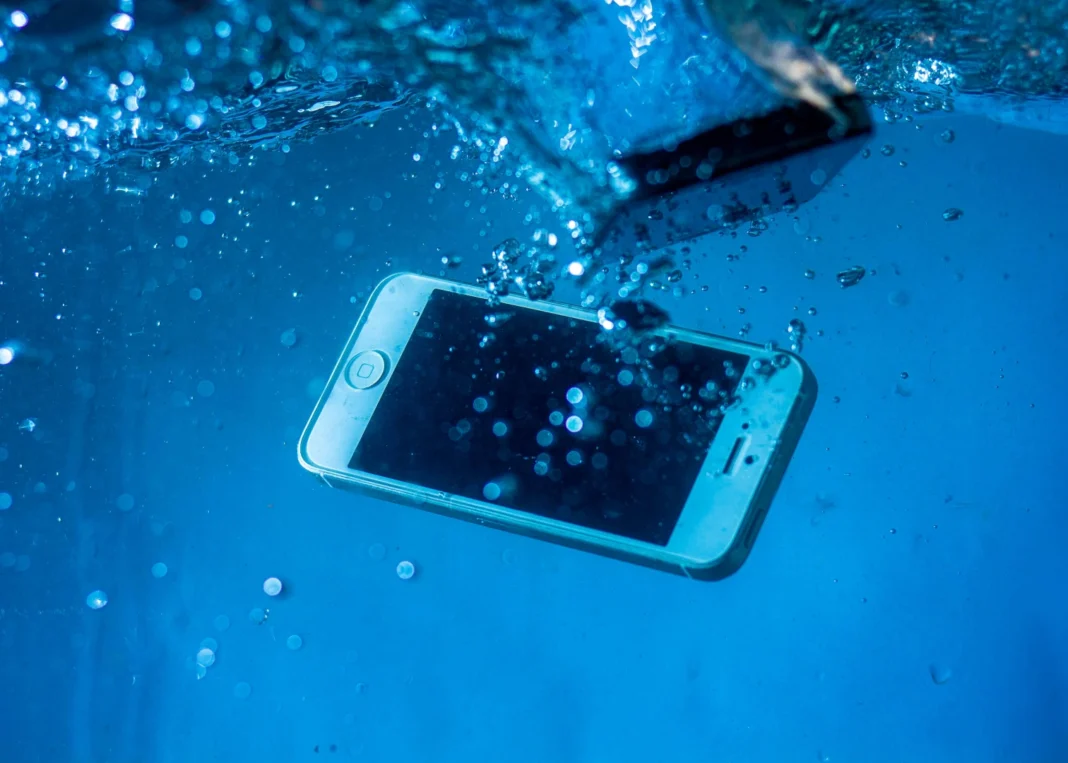
So IP67, the rating you’ll see on most modern smartphones, means the device is fully sealed against dust and can survive a brief submersion.
| Digit | What It Blocks | What That Means |
| 0 | Nothing | No protection at all |
| 1 | Objects >50 mm | Stops a hand from reaching inside |
| 2 | Objects >12.5 mm | Stops fingers |
| 3 | Objects >2.5 mm | Stops tools and thick wires |
| 4 | Objects >1 mm | Stops most wires and small screws |
| 5 | Dust protected | Dust may enter but won’t cause damage |
| 6 | Dust tight | Completely sealed. Zero dust gets in |
When one of the digits is replaced with an X, it means the manufacturer simply hasn’t tested or claimed a rating for that category.
IPX4 means the liquid protection has been tested (splash-resistant from any direction), but there’s no official claim on dust. It doesn’t automatically mean unprotected from dust, just that no number was submitted for it.
| Digit | What It Withstands | Real-World Scenario |
| 0 | Nothing | No water protection at all |
| 1 | Vertical drips | Light rain falling straight down |
| 2 | Drips at 15° tilt | Rain when the device is slightly angled |
| 3 | Spray up to 60° | Rain from a light angle, garden misting |
| 4 | Splashes any direction | Splashed from any side |
| 5 | Low-pressure jets | A hose running from a meter away |
| 6 | High-pressure jets | A pressure washer at reasonable distance |
| 7 | Immersion up to 1 m | Dropped in a pool or bathtub, 30 minutes |
| 8 | Immersion beyond 1 m | Depth and duration set by manufacturer |
| 9K | Hot, high-pressure jets | Industrial washdowns, vehicle cleaning |
A few things worth knowing before you rely on an IP rating. The rating is tested on a new, out-of-the-box unit. Seals degrade with use, and a device that survives one meter of water on day one may not after a year of regular handling.

The rating also says nothing about what happens if you drop the device, since impact resistance is an entirely separate matter. And while IP7 and IP8 both cover submersion, the specific depth and time for IP8 is set by the manufacturer, so you’d need to check the product specs to know what’s actually been tested.
- IP44: Basic outdoor lighting, simple electronics. Handles splashes, blocks objects over 1 mm.
- IP55: Outdoor enclosures, some portable speakers. Limited dust, handles low-pressure jets.
- IP67: Most smartphones, wearables, outdoor sensors. Fully dust-tight, up to 1 m immersion.
- IP68: Premium phones, underwater cameras. Fully dust-tight, deeper or longer immersion.
- IP69K: Industrial machinery, food processing. Survives hot, high-pressure washdowns.
The word “waterproof” has no standardized meaning in product labeling. A speaker marketed as waterproof could mean anything from splash-resistant to genuinely submersible. An IP rating removes that ambiguity and gives you a specific, testable number to compare across products.