
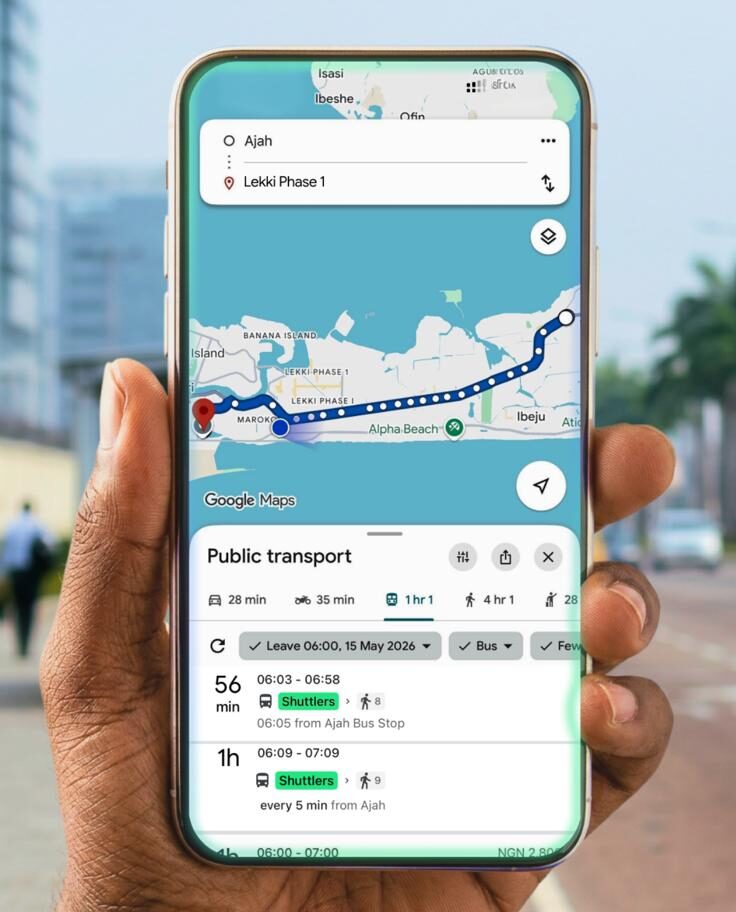

Technology-enabled shared mobility platform Shuttlers has announced its integration into the Google Maps Transit system in Nigeria, alongside the completion of its 10 millionth journey, marking a significant milestone in the company’s growth and the evolution of urban mobility solutions in Africa.
The integration enables commuters using Google Maps to access Shuttlers’ transit routes while planning their journeys and seamlessly book seats through the platform. The move is expected to enhance access to reliable shared transportation services for professionals and businesses operating within major urban centres.
The development comes at a time when African cities are grappling with mounting transportation challenges driven by rapid urbanisation and population growth. According to the World Bank, transport inefficiencies cost African cities between 2 and 5 per cent of their Gross Domestic Product annually. In Lagos, one of Africa’s most congested cities, commuters lose more than 30 hours every month in traffic congestion.
To qualify as a Google Transit Partner, Shuttlers aligned its data systems, route infrastructure and real-time operational capabilities with Google’s transit partner requirements, enabling the platform to provide accurate and reliable transit information through Google Maps.
Speaking on the achievement, Damilola Olokesusi, Chief Executive Officer and Co-Founder of Shuttlers, said the twin milestones reflect a decade of investment in technology and operational excellence.
“We are incredibly proud of our integration into the Google Maps Transit system. This, alongside hitting 10 million journeys since launch, is a reflection of years of hard work. For millions of professionals, commuting is still unpredictable, exhausting and expensive. We have spent the last 10 years building technology and operational infrastructure that makes daily transportation more dependable for commuters, businesses and fleet operators,” she said.
Commenting on the partnership, Olumide Balogun, Director for West Africa at Google, noted that access to reliable transit information is critical for improving urban mobility.
“We are pleased to welcome Shuttlers into the Google Transit ecosystem in Nigeria. Reliable transit information helps people navigate cities more confidently and efficiently. As more Nigerians adopt digital tools for everyday mobility, integrations like these help make trusted transportation easier to discover and access,” he said.
Founded in 2016, Shuttlers currently serves approximately 30,000 active users across more than 1,000 itineraries, deploying over 430 buses daily across Lagos, Abuja and Port Harcourt. The company reports a 99 per cent trip completion rate and a 99.94 per cent incident-free rate throughout its operational history.
The platform says its users save between 60 and 88 per cent on transport costs compared to ride-hailing services while recovering between eight and 12 hours previously lost to traffic congestion each month.
As part of its sustainability agenda, Shuttlers is expanding the adoption of Compressed Natural Gas (CNG) and electric buses within its fleet. The company estimates that these cleaner transport alternatives can reduce emissions by up to 60 per cent compared to conventional diesel-powered vehicles.
Looking ahead, Shuttlers says it will continue investing in structured and technology-driven mobility solutions aimed at improving urban transportation across Africa, while creating greater value for commuters, employers and transport operators.
Related
- Kenya signs trade pact with UAE to boost Investments integration
- EdTech: Deploying Contemporary Information Technology solutions for Academic Delivery
- Report:Enterprises Accelerating Edge Adoption to Get Ahead of Competition
- Rolling Stone Africa, ON Kenya Launch ‘Voices in Motion’ for Young Sports Storytellers