

At IFA ShowStoppers 2026 in Berlin, TECNO unveiled a concept phone designed to remove the smartphone screen’s final visible boundary, while showcasing a wider portfolio of flexible laptops and performance-focused smartphones.
For years, smartphone makers have competed to make the bezels around their displays thinner. Millimetre by millimetre, the black border separating the screen from the frame has been reduced, giving users larger viewing areas without necessarily making devices physically larger.
At IFA ShowStoppers 2026 in Berlin, TECNO took that pursuit a step further.
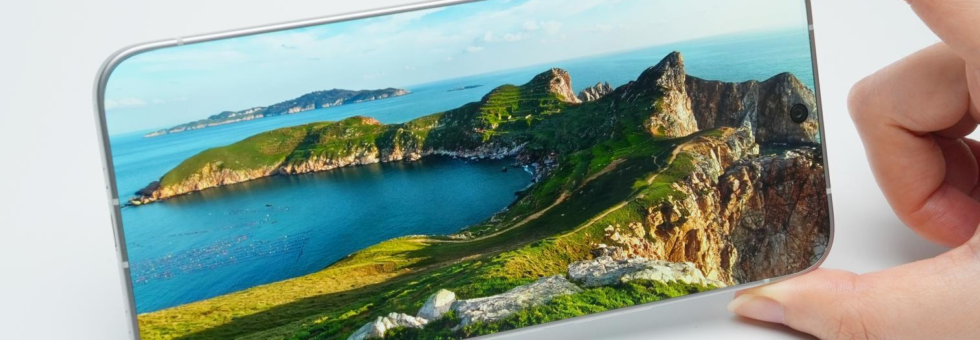
The technology brand unveiled its Next-Gen Bezelless Concept Phone, a device designed around what TECNO describes as a true 0mm display border. Instead of simply making the bezel narrower, the concept removes the visible black edges normally found between the active display and the outer frame.
The result is a phone in which the display appears to run directly into the edges of the device, creating a continuous visual surface.
TECNO says the concept addresses the final one to two millimetres that can remain visible even on smartphones with extremely narrow bezels. Achieving that effect required changes beyond the screen itself, including display architecture, internal component stacking, structural engineering and screen-packaging techniques.
The concept illustrates how smartphone design is increasingly becoming a question of what can be removed from the device as much as what can be added to it.
A thinner border may appear to be a relatively small engineering achievement, but its effect is immediately visible. For watching video, gaming, viewing photographs or simply browsing, the absence of a visible frame changes the relationship between the user and the content.
TECNO presented the phone as a technology demonstration rather than a retail product.
The Next-Gen Bezelless Concept Phone is not commercially available and does not have a confirmed launch date or market. Technologies developed around areas such as camera integration, touch sensitivity, sound, structural design and user-interface interaction are instead expected to inform future generations of devices.
That distinction is important as the technology showcased in Berlin spans both experimental concepts and products intended for the consumer market.
Beyond the Concept
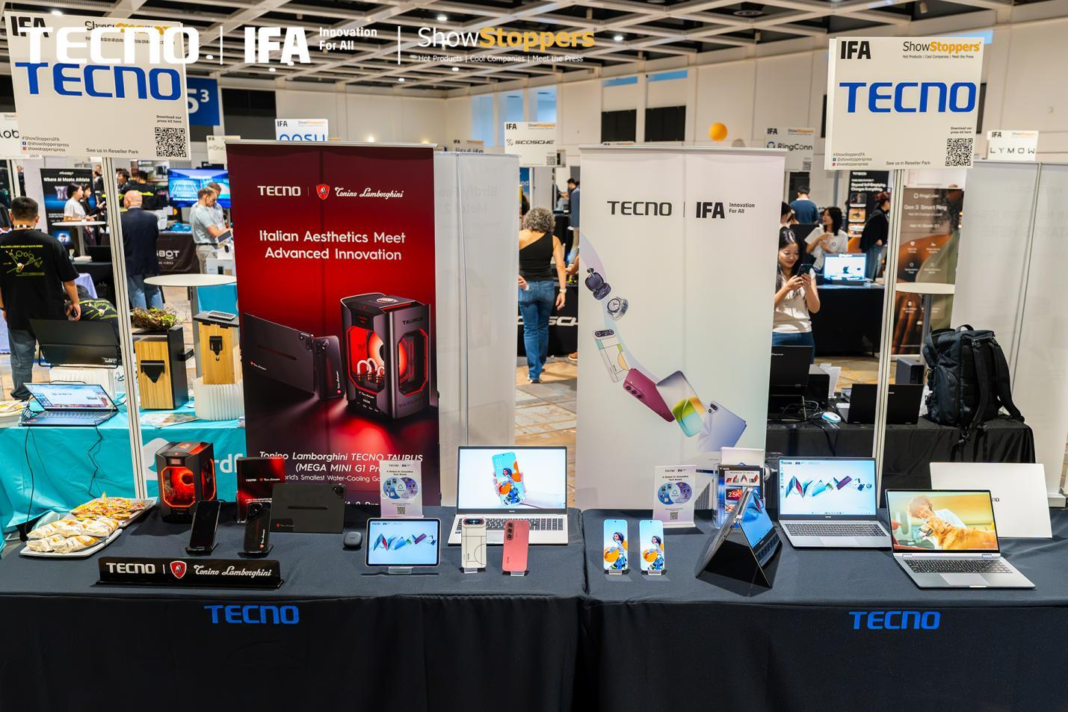
The bezelless phone may have provided the visual centrepiece, but it was only one part of TECNO’s wider IFA ShowStoppers 2026 presentation.
The company also showcased the MEGABOOK T15 360 Series, the MEGABOOK T17 Ultra, the MEGABOOK K15S WCL, the POVA 8 Pro 5G Tonino Lamborghini Limited Edition and the CAMON Slim 5G.
Together, the products point to a broader direction in which smartphones and computers are expected to serve multiple roles, from work and study to content creation, gaming and entertainment.
For markets such as Kenya, where a smartphone can function as a communication device, entertainment screen, productivity tool and gateway to digital services, that convergence is particularly relevant.
TECNO operates in more than 70 markets, including Kenya, although the products displayed in Berlin should not automatically be interpreted as being available locally.
At the time of the showcase, Kenya-specific pricing, availability and launch schedules had not been confirmed for the devices featured.
One Laptop, Four Ways to Work
Among the products showcased was the MEGABOOK T15 360 Series, TECNO’s first laptop range to combine a 360-degree hinge with touchscreen functionality.
The T15 360 and T15 360 Pro are designed to change shape according to the task, operating as a conventional laptop, tablet, tent or stand.
For students, professionals and creators, that flexibility can make a single computer suitable for very different situations. A user can work in traditional laptop mode, fold the screen back for handwritten notes or sketches, position it for a presentation or use it as a screen for entertainment.
Both models feature 15.6-inch touchscreens with 10-point multi-touch support and optional MPP 2.0 active-pen compatibility.
The standard MEGABOOK T15 360 features a Full HD 60Hz display, while the Pro version offers a 2.5K 120Hz panel with 100 per cent sRGB colour coverage.
The machines can be configured with up to an Intel Core Ultra 9 185H processor, LPDDR5X memory and PCIe SSD storage. A 70Wh battery and 65W PD GaN charger are designed to make the computers easier to use away from a conventional desk.
Connectivity includes up to Wi-Fi 6E and Bluetooth 5.4, with seven built-in ports. Through TECNO OneLeap, compatible TECNO devices can also work together across smartphones, tablets and PCs.
The MEGABOOK T15 360 Series is scheduled for European availability in the fourth quarter of 2026, while availability in other markets will depend on local launch plans.
Bigger Screens, Different Priorities
TECNO’s laptop portfolio at the event extended beyond the convertible T15 360.
The MEGABOOK K15S WCL was positioned around the needs of students and early-career professionals. It combines Intel’s Wildcat Lake platform with a 16:10 display, an all-metal design, a 70Wh battery and 65W GaN fast charging.
At the other end of the range, the MEGABOOK T17 Ultra puts greater emphasis on screen size and computing capacity.
Its 17.3-inch display provides a larger working area, while configurations can reach an Intel Core Ultra 9 processor and LPDDR5X memory. A 99.99Wh battery and 100W GaN PD fast charging are designed for extended and demanding use, including productivity, creative work, moderate gaming and entertainment.
The contrast between the two machines reflects the increasingly varied roles laptops play. For some users, portability and practicality are the priority. For others, a larger screen and additional processing capacity are more important.
Smartphones Built Around Different Ideas
The smartphone part of the showcase presented a similar range of priorities.
The POVA 8 Pro 5G Tonino Lamborghini Limited Edition combines POVA’s performance-oriented positioning with the design language associated with Tonino Lamborghini.
Under the exterior design, the phone uses a dual-chipset architecture built around the MediaTek Dimensity 7400 Ultimate 5G platform and TECNO’s P1 Graphic Chip. A 5K IceShield Vapor Chamber Cooling System is designed to support sustained performance, while imaging and AI features add to its everyday functionality.
The CAMON Slim 5G, meanwhile, approaches the smartphone from a different direction.
At 6.39mm thick, the device brings the CAMON line’s emphasis on mobile imaging into a slim body. It combines a thin profile with imaging capabilities, AI functions and a range of colour options, targeting consumers who want a photography-focused smartphone without a bulky form factor.
A Glimpse of Where Screens Could Go
The significance of TECNO’s bezelless concept lies less in whether consumers can buy it today and more in the engineering problem it attempts to solve.
Smartphone displays have progressively occupied more of the front surface of devices. Notches gave way to smaller cut-outs, bezels became narrower and cameras and sensors increasingly disappeared into the display architecture.
The 0mm-border concept represents another step in that progression.
It also highlights the complexity involved in creating a phone that appears to have no boundary around its screen. A smartphone still needs structural strength, touch functionality, cameras, speakers and other components, all while maintaining durability and usability.
TECNO’s concept therefore represents an exercise in integrating those competing requirements into a smaller physical space.
Whether and when elements of the technology reach mass-market smartphones remains to be seen. For now, the concept provides a glimpse of one possible direction for smartphone design, one in which the physical boundaries surrounding digital content become progressively less visible.
For TECNO, that experiment sits alongside a more immediate portfolio of laptops and smartphones designed for everyday users.
In Berlin, the company was therefore presenting two sides of technology development at once: products designed for today’s consumers and a concept exploring what the devices of tomorrow might look like.
What It Means for Kenya
For Kenyan consumers, the IFA showcase provides an indication of the technologies and form factors that could eventually enter the local market, but it does not constitute a local product launch.
The Next-Gen Bezelless Concept Phone remains a concept and is not available for sale. The MEGABOOK T15 360 Series, MEGABOOK T17 Ultra, MEGABOOK K15S WCL, POVA 8 Pro 5G Tonino Lamborghini Limited Edition and CAMON Slim 5G are commercial products, but Kenya-specific pricing, availability and launch dates had not been confirmed at the time of the showcase.
Local consumers will therefore need to rely on official TECNO Kenya communication for confirmation of availability.
For now, the message from Berlin is broader: the boundaries between smartphones and computers continue to evolve, while manufacturers are looking for new ways to make screens more immersive, computers more flexible and mobile devices more capable.
TECNO’s 0mm-border concept takes that search to its most literal expression yet, by attempting to make the border itself disappear.