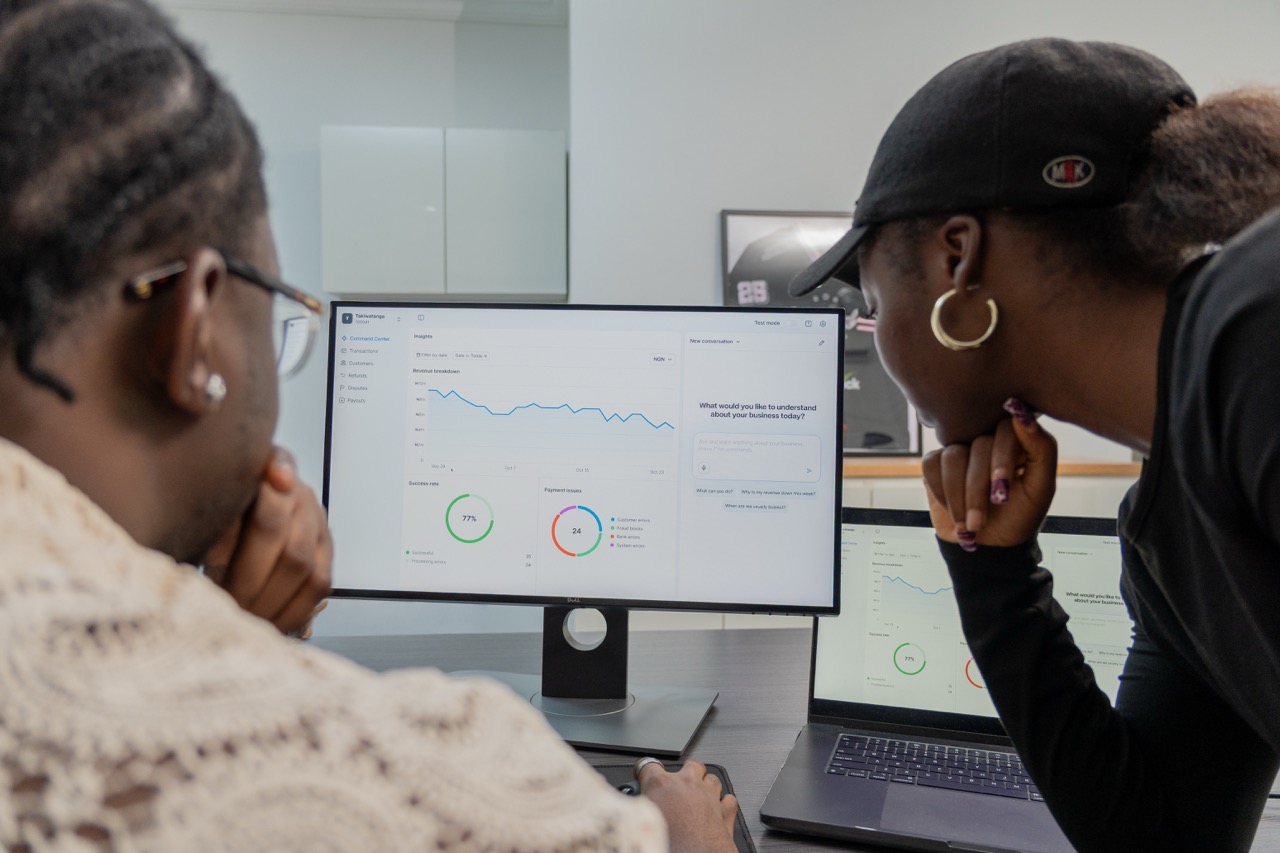

Paystack has announced a major overhaul of its Dashboard, marking the first full rebuild in over 10 years. The redesigned platform introduces an AI-native Command Centre that allows businesses to interact with their payment data using natural language and receive instant, data-driven insights.
The update represents a significant shift in how merchants engage with the Paystack ecosystem—moving from traditional dashboards focused on navigation-heavy reporting to an intelligent, conversational interface designed for faster decision-making.
A Smarter, AI-Native Command Centre
At the core of the new Dashboard is an AI-powered Command Centre embedded directly into the interface. Instead of relying on separate chatbots or external tools, merchants can now ask questions such as:
- “What happened with this transaction?”
- “Why did revenue drop this week?”
The system responds instantly using Paystack’s own merchant data, presenting answers in the most useful format—whether text, tables, or visual charts.
The experience is powered by a combination of GPT-based models, structured data retrieval systems, and visualization tools, ensuring responses remain accurate, contextual, and actionable.
Simplified Navigation for Faster Operations
As Paystack expanded its product suite over the years, the Dashboard became increasingly complex. The redesign simplifies this structure by reorganizing navigation into two primary sections:
- Payments
- Products
This streamlined architecture makes it easier for businesses to locate tools quickly while supporting future product expansion without adding clutter.
Full Mobile Parity and Enhanced Usability
The new Dashboard now offers full feature parity across desktop and mobile devices, ensuring merchants can manage their operations seamlessly from anywhere.
Additional usability upgrades include:
- Dark mode support for improved viewing comfort
- Cleaner navigation and improved user flow
- Stronger built-in analytics capabilities
These enhancements aim to make everyday financial operations more intuitive and accessible across devices.
Built for Trust, Security, and Compliance
To power the AI Command Centre, Paystack developed a new internal service known as the Project Canvas API. This system manages conversations, connects to AI model providers, and integrates directly with Paystack’s core infrastructure.
Given the sensitivity of financial data, the system was designed with strict safeguards:
- Responses are grounded in verified merchant data
- Outputs are filtered through safety and compliance layers
- Extensive adversarial testing was conducted before launch
- A full Data Protection Impact Assessment was completed in collaboration with Paystack’s privacy and data protection teams
These measures ensure that insights remain both accurate and secure.
Designed Around Merchant Needs
According to Paystack’s product team, the redesign was shaped by extensive merchant research, including usability studies and feedback sessions on how businesses access and interpret financial information.
The goal is to reduce time spent navigating dashboards and increase time spent making decisions.
“Businesses don’t come to their dashboard because they want to click through pages. They come because they have questions,” said Dara Assim-Ita, Senior Product Designer at Paystack, who led the rebuild.
He added that the aim is to transform the Dashboard into an intelligent command centre where merchants can quickly understand what is happening in their business and act on it.
The Future of Paystack’s Dashboard Experience
The current release focuses on core payments functionality, but Paystack has confirmed that additional products will gradually be integrated into the new architecture over time.
This positions the Dashboard as a central hub for the company’s expanding ecosystem, with AI playing a growing role in how businesses interact with financial data.
About Paystack
Paystack is one of Africa’s leading payments technology companies, enabling businesses to accept payments seamlessly online and in-person while providing tools for growth, analytics, and financial management.